
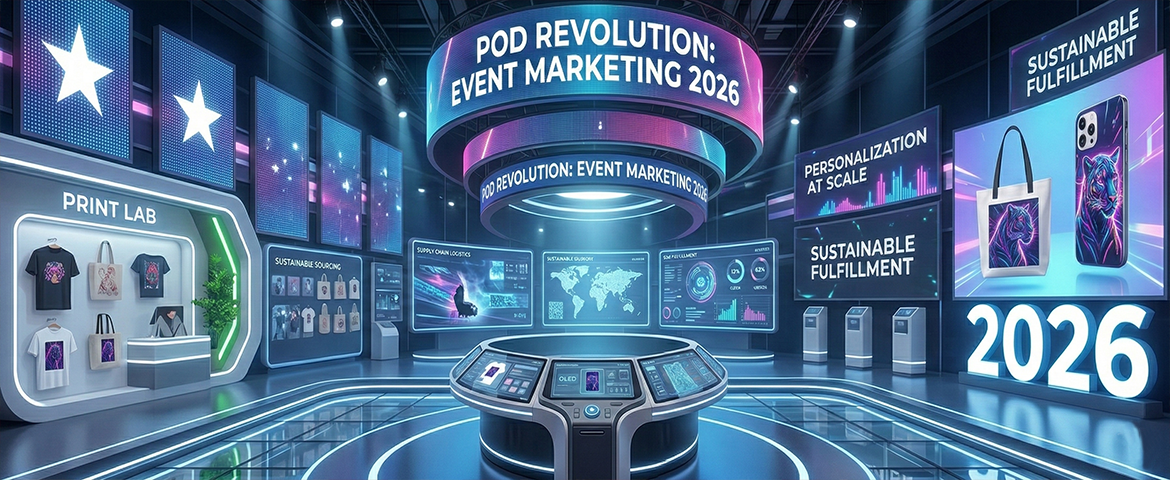
Event Marketing 2026 is becoming a major topic in the Print on Demand (POD) community, especially among sellers targeting the U.S. market. From Valentine’s Day and Easter to Independence Day and major milestones like America 250, event-based shopping continues to grow. These moments create short but highly profitable sales windows.
However, an important question remains:
Is Event Marketing a sustainable growth strategy for POD sellers, or is it simply a short-term trend that creates temporary revenue spikes?
This article explores the real role of Event Marketing within the POD model. We will look at why 2026 presents strong opportunities, the risks that often cause sellers to fail, and practical strategies to capture event demand while keeping operations stable and scalable.
What Is Event Marketing in the POD Model?
In eCommerce, and especially in the Print on Demand industry, Event Marketing is not about hosting events. Instead, it refers to selling products designed around specific occasions with clear seasonal demand.
While evergreen products generate steady daily sales, Event Marketing allows sellers to scale revenue quickly during short time periods by tapping into seasonal buying behaviour.
For many POD sellers, these event windows can become major revenue drivers when executed correctly.
Common Types of POD Event Campaigns
Most Event Marketing strategies in POD fall into four key categories.
Holiday Events
Holiday campaigns are often considered the “gold mines” of the POD industry. Examples include Christmas, Valentine’s Day, and Easter. These occasions generate massive demand for gifts and personalised products.
National Events
Public holidays connected to national identity also create strong sales opportunities. Independence Day is a good example. In 2026, the America 250 celebration is expected to become one of the largest event-driven shopping moments.
Cultural and Social Events
Certain cultural or social celebrations also generate strong niche demand. Examples include Pride Month, St. Patrick’s Day, or events linked to social movements.
Community-Based Events
These are more personal milestones such as graduation season, major sporting events like the Super Bowl or World Cup, and family occasions like Mother’s Day and Father’s Day.
One key characteristic of event-based products is timing. Demand typically rises 2 to 4 weeks before the event and drops quickly after the event ends.
Why POD Works Well for Event Marketing
The Print on Demand model has several structural advantages that make it well suited for fast-moving event campaigns.
No Inventory Risk
With POD, production only starts after an order is placed. This removes the risk of unsold inventory.
If a Halloween design performs poorly, the seller only loses design time. There are no storage costs or inventory investments.
Strong Personalisation Capability
Customers often buy event products as gifts or personal keepsakes. POD allows sellers to easily customise products with names, dates, or personal messages.
This feature significantly improves conversion rates on marketplaces like Etsy and Amazon.
Fast Testing and Scaling
Speed is critical in Event Marketing. POD allows sellers to test multiple designs quickly.
For example, a seller can launch 10–20 designs for a single event to test demand. Once a winning design is identified, advertising budgets can be increased immediately using platforms like Facebook Ads or TikTok Ads.
This ability to move quickly gives POD sellers a strong competitive advantage.
Why Event Marketing 2026 Is a Major Opportunity
The eCommerce landscape is becoming increasingly competitive. Selling evergreen products alone is no longer enough to stand out.
The year 2026 may become a breakthrough year for Event Marketing due to two major factors: shifting consumer behaviour and major historical events.
U.S. Consumers Are Buying Based on “Moments”
Consumer behaviour in the United States is shifting from purely need-based purchases to emotion-driven purchases.
Many buyers are not just purchasing a product. They are buying something connected to a specific moment.
Examples include:
Valentine’s Day – personalised gifts representing meaningful relationships
Easter – colourful family and children’s products
Independence Day – patriotic designs linked to national pride
Social media platforms such as TikTok and Instagram Reels are accelerating this behaviour. When a design resonates with the audience at the right moment, it can quickly go viral and generate massive search demand across Etsy, Amazon, and Shopify.
America 250 Creates a Rare Market Opportunity
The year 2026 marks the 250th anniversary of the founding of the United States. Known as America 250, this historic celebration is expected to generate significant consumer spending.
For POD sellers, this represents a unique market window.
Search demand related to national pride, history, and anniversaries is expected to increase dramatically. Sellers can also combine America 250 themes with niche communities such as veterans, state pride groups, or cultural heritage audiences.
Commemorative products tied to historical milestones often allow higher pricing because they carry strong emotional value.
However, sellers must prepare early. Research and design work should begin at least three to four months in advance.
Event Marketing Helps Balance Revenue Across the Year
Many POD sellers depend heavily on Q4, especially Black Friday and Christmas. This creates pressure on logistics, fulfilment capacity, and cash flow.
Event Marketing provides a way to distribute revenue more evenly throughout the year.
Events such as Valentine’s Day in February, St. Patrick’s Day in March, Easter in April, and Mother’s Day in May help generate consistent sales during the first half of the year.
By spreading revenue across multiple quarters, sellers reduce the risk of depending too heavily on the holiday season.
The Risks of Event Marketing
Although Event Marketing can generate strong sales, it also carries risks. Many sellers fail during their first event campaigns.
Understanding these risks is critical for long-term success.
Preparing Too Late
Late preparation is one of the most common mistakes in Event Marketing.
Some sellers start designing and running ads only two or three weeks before the event. In the U.S. market, this is usually too late.
There is not enough time to test designs, production facilities become overloaded, and delivery delays become more likely.
When products arrive after the event date, customers may request refunds and leave negative reviews.
Professional sellers typically begin preparing their campaigns 60 to 90 days in advance.
Ignoring Fulfilment Capacity
During peak seasons, production and logistics systems face heavy pressure.
Some sellers focus only on marketing but fail to check whether their fulfilment partners can handle increased order volume.
If fulfilment cannot keep up, several problems can occur:
Tracking updates may be delayed
Order cancellations may increase
Marketplace penalties may occur
Store ratings may drop
Even a few one-star reviews related to late delivery can damage store credibility significantly.
Chasing Trends Without Data
Social media trends can create strong hype, but not all viral ideas translate into real sales.
Many sellers rush to launch designs based on viral TikTok content without checking actual search demand.
A viral video does not necessarily mean customers are willing to buy a related product.
Effective Event Marketing campaigns should always be supported by real data, including search volume on Amazon, Etsy, or Google Trends.
Legal risks are another concern. Launching designs based on trending content without checking trademarks can result in account suspension.
How POD Sellers Should Approach Event Marketing 2026
To succeed with Event Marketing, sellers need a structured approach rather than reacting impulsively to trends.
Build an Annual Event Calendar
Successful sellers usually plan their campaigns for the entire year.
A good event calendar includes:
5 to 8 major events to focus on
Clear research and launch timelines
Key products for each event
For example, T-shirts may work well for St. Patrick’s Day, while tumblers may perform better for Father’s Day.
Planning ahead allows sellers to allocate design resources, advertising budgets, and operational capacity more effectively.
Follow the 60–90 Day Preparation Rule
Timing is critical in POD event campaigns.
A typical preparation timeline looks like this:
90 days before the event – keyword research and competitor analysis
60 days before the event – design production and listing optimisation
30 days before the event – begin scaling ads and collecting market data
14 days before the event – focus on conversion optimisation and customer support
This structured approach helps sellers capture demand early while reducing operational stress.
Balance Event Products and Evergreen Products
A sustainable POD business does not rely on event campaigns alone.
Event products should act as revenue accelerators, while evergreen products maintain daily store stability.
Many experienced sellers follow a balanced structure:
60–70% evergreen products
30–40% event products
This balance helps protect revenue if a specific event does not perform as expected.
Ensure a Reliable Fulfilment System
Even the best marketing strategy will fail if products arrive late or have quality issues.
With the America 250 event expected to increase printing demand in 2026, fulfilment stability will become even more important.
Sellers should prioritise partners with U.S.-based production facilities to reduce shipping time.
Quality control must also be consistent to prevent returns and negative reviews.
Finally, tracking information must be updated quickly to maintain good marketplace performance metrics.
Final Thoughts
Event Marketing 2026 is not just a short-term trend in the Print on Demand industry. When implemented strategically, it can become a powerful growth engine for POD sellers.
Success depends on understanding market timing, preparing campaigns early, and working with reliable fulfilment partners.
Instead of chasing trends impulsively, sellers should build event strategies based on real market data and integrate them into a long-term business plan.
When done correctly, Event Marketing becomes more than a temporary opportunity. It becomes a core system for scaling a POD business sustainably in 2026 and beyond.